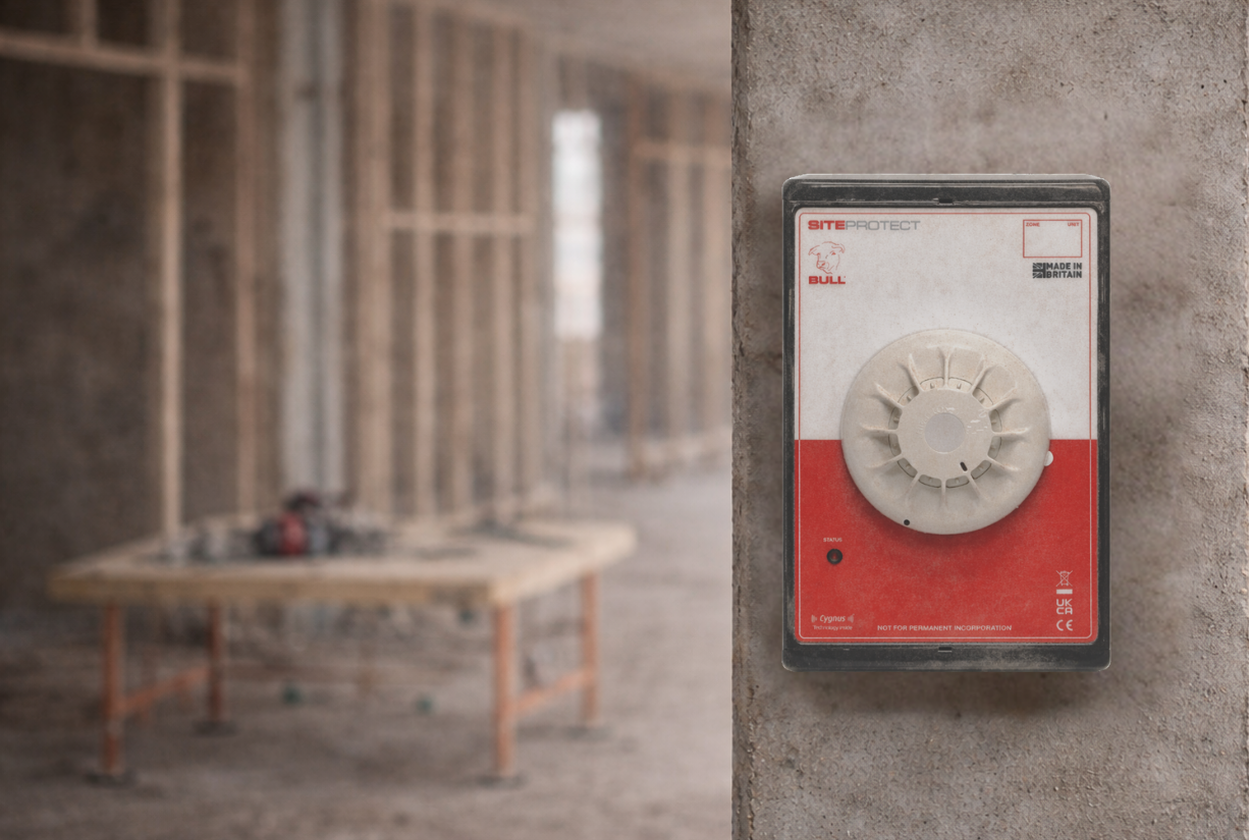
The Hidden Cost of False Alarms
False alarms do more than interrupt work. They disrupt progress, affect productivity and add pressure to project timelines.
As activity ramps up and site environments become more harsh, repeated false alarms can reduce confidence in safety systems and increase the risk of delayed response when a real incident occurs.
Frequent false alarms can lead to complacency, increasing risk when a genuine emergency happens.
Why False Alarms Happen More Often on Construction Projects
Construction sites are less controlled than finished buildings. Dust, steam, fumes, temporary heating and changing layouts can all affect how detection performs.
These conditions are especially challenging on large, high-risk projects such as timber frame construction, where traditional detection methods can struggle.
Dust and fumes
Airborne particles can increase unwanted activations.
Changing layouts
Detection needs shift as the build progresses.
High site activity
Multiple trades create harsher conditions.
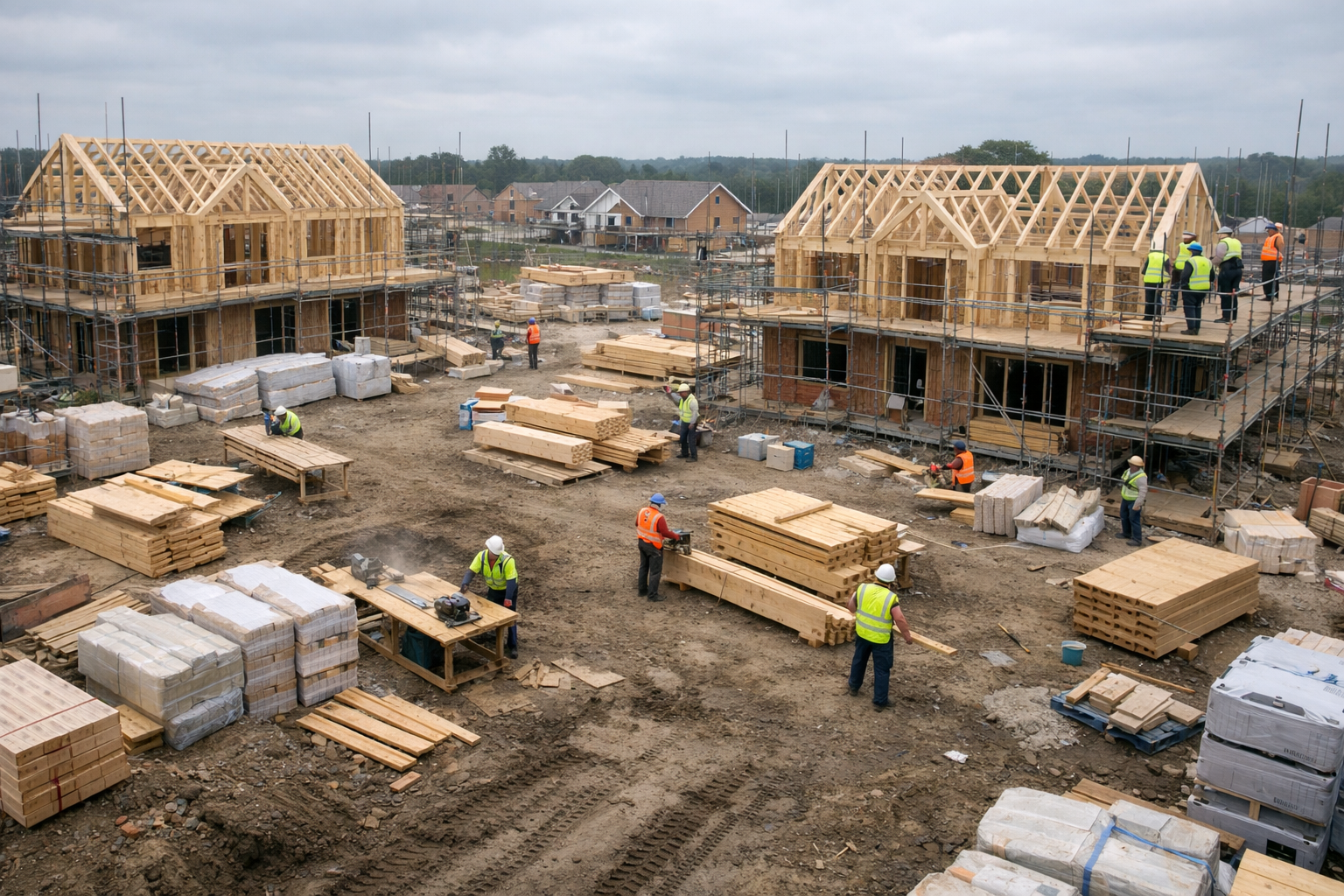
Timber frame construction sites combine dust, movement and evolving layouts, creating challenging conditions where traditional fire detection can be more prone to false alarms.
Designed for Buildings, Not Construction Sites
Many fire detection systems are designed for stable indoor environments, not temporary construction sites.
Smoke detection
Can be affected by dust and fumes, increasing false alarms.
Heat-only detection
Can respond later in the early stages of a fire.
Construction sites need detection better suited to harsh and changing conditions.
Four Ways to Reduce False Alarms on Site
Reducing false alarms starts with selecting detection methods that reflect the realities of temporary construction environments. The goal is to improve accuracy, maintain confidence in the system and minimise avoidable disruption.
Choose detection suited to site conditions
Account for dust, fumes, movement and changing layouts when selecting detection.
Avoid reliance on a single detection method
Single-sensor detection can struggle in complex environments. Combining inputs improves accuracy.
Adapt as the site evolves
Update detection as layouts, access routes and risks change throughout the build.
Choose smarter sensing technology
Multi-criteria detection filters out site conditions like dust and fumes while responding to real fire events.
Reducing False Alarms with Smarter Detection
One effective way to reduce false alarms is to use carbon monoxide (CO) detection, which is less affected by dust, steam and fumes.
When combined with heat sensing, it provides a more reliable way to identify real fire conditions. CO is produced early in combustion, while heat confirms fire presence.
Combined CO and heat detection improves accuracy and reduces unwanted activations.
Practical resource
Download the SITEPROTECT CO/Heat Detector Overview
A quick-reference guide to how CO and heat detection work together to reduce false alarms on construction sites.
Detection Designed for Construction Environments
Construction sites need detection that can cope with high activity, dust and changing layouts.
The SITEPROTECT CO/Heat Detector combines carbon monoxide and heat sensing to support earlier fire indication while reducing false alarms.
Earlier indication
Detects CO in early combustion stages.
Fewer false alarms
Less affected by dust and site contaminants.
Flexible deployment
Works across changing site layouts.
Supporting Safer, More Efficient Projects
Reducing false alarms helps keep safety systems trusted, effective and fit for purpose throughout the build.
With more accurate detection, sites can maintain both safety and productivity without unnecessary disruption.
Better detection supports safer, more efficient construction projects.
Building Better practical resource
Download the SITEPROTECT CO/Heat Detector Overview
Get the quick-reference PDF covering how dual sensing detection can help reduce false alarms on construction sites while supporting earlier indication of fire.
- Why false alarms happen more often on temporary construction sites
- How CO and heat detection work together to improve reliability
- Key benefits for dust-heavy and high-activity environments
Access the Overview
Enter your details to receive the PDF by email.
By submitting this form you agree to receive relevant updates from Bull Products. You can unsubscribe at any time. Privacy policy.
Ready to Reduce False Alarms on Your Site?
Discover how smarter detection can help improve safety, reduce disruption and support better site performance.
For expert guidance on fire safety in complex, live construction environments, speak to the Bull Products team today. Call us on 01432 806080 or email sales@bullproducts.co.uk.